
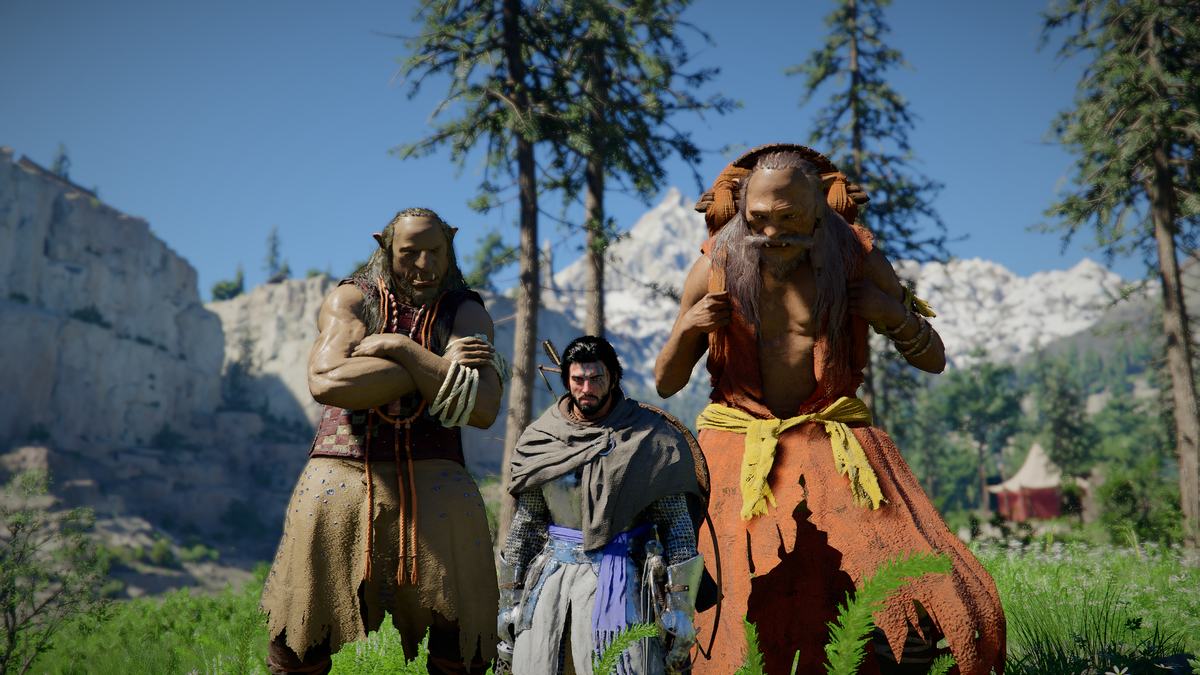
Two Pearl Abyss developers have claimed Crimson Desert was developed in a troubled environment, characterised by an inverted management hierarchy and leaders who “don’t acknowledge anyone who doesn’t share their exact mindset”.
While the claims are anonymous and cannot be independently verified, both were posted to Blind, an industry-only closed online community that requires members to verify their identities before joining. They’ve also been translated by machine, so may include mistakes and missing nuance and context (the original text is included in the report).
The first revealed that “Crimson Desert originally wasn’t like this”, which is why “there is no talk about the Crimson Desert in Crimson Desert” because the team allegedly did not finalise the story “until right before release”.
Pearly Abyss devs anonymously share a culture of toxic positivity, Crimson Desert’s messy story and game development, and how they knew the game “was going off the rails”
by
u/ChiefLeef22 in
GamingLeaksAndRumours
“In the middle of it, a director was pushed out in a power struggle and resigned, and once someone from an art background became the General Manager, they started overturning everything,” the poster claimed. “This person who became general manager is a general manager in name only; they are just a compliant subordinate. And every person in the team who holds a rank is just a compliant subordinate. Individual will? Personal opinion? They do not exist. That is why they can hold a rank.”
The post goes on to claim that When The Legend of Zelda: Tears of the Kingdom released, the team “hurriedly followed and made sky island that makes no sense. They brought in systems from various games as references, but without understanding at all why those systems were put into those games, they exist only as a means for a purpose”.
The second poster has seemingly since left Pearl Abyss, but said they’d been part of the development team “for a long time”. They described the management hierarchy as “structured like an inverted pyramid, placing more ‘leaders’ than rank-and-file employees”.
“I believe most of my colleagues involved in development were aware that Crimson Desert was going off the rails,” they claim. “However, I don’t think many were in a position to speak up about it. As I mentioned, [management] don’t acknowledge anyone who doesn’t share their exact mindset. They just praise their own work as ‘amazing’, and whenever they see a reference from here or there that looks good, they just shove it in.
“Because it became such a hodgepodge of features crammed together, the control layout must have been a mess, too. I believe it was an inevitable conclusion that Crimson Desert would become a disaster. I don’t think a proper direction can ever emerge from a company that suppresses people for calling out what is wrong,” they added.
Since release, the poster said watching reviews and streamers play Crimson Desert feels “bittersweet”, not least because all the comments and complaints about the game “are the exact things we used to gather and say”.
“From here on out, I expect they will try to shift the blame-digging through the development history of individuals to find someone to pin the responsibility on for why it turned out this way,” they concluded. “Anyway, to my colleagues who developed Crimson Desert, to those who left for various reasons, and to those in the industry who supported us: you’ve all worked so hard, and thank you. The industry is very cold and harsh right now, but I hope everyone stays strong.”
The posts have allegedly gone viral on Korean social media, and have been verified by other developers familiar with the studio.
We’ve reached out to Pearl Abyss for comment.
Earlier today, Pearl Abyss responded to claims its latest game used AI to generate images, admitting “2D visual props were created as part of early-stage iteration using experimental AI generative tools“. It claims it had always intended to replace them before release.