
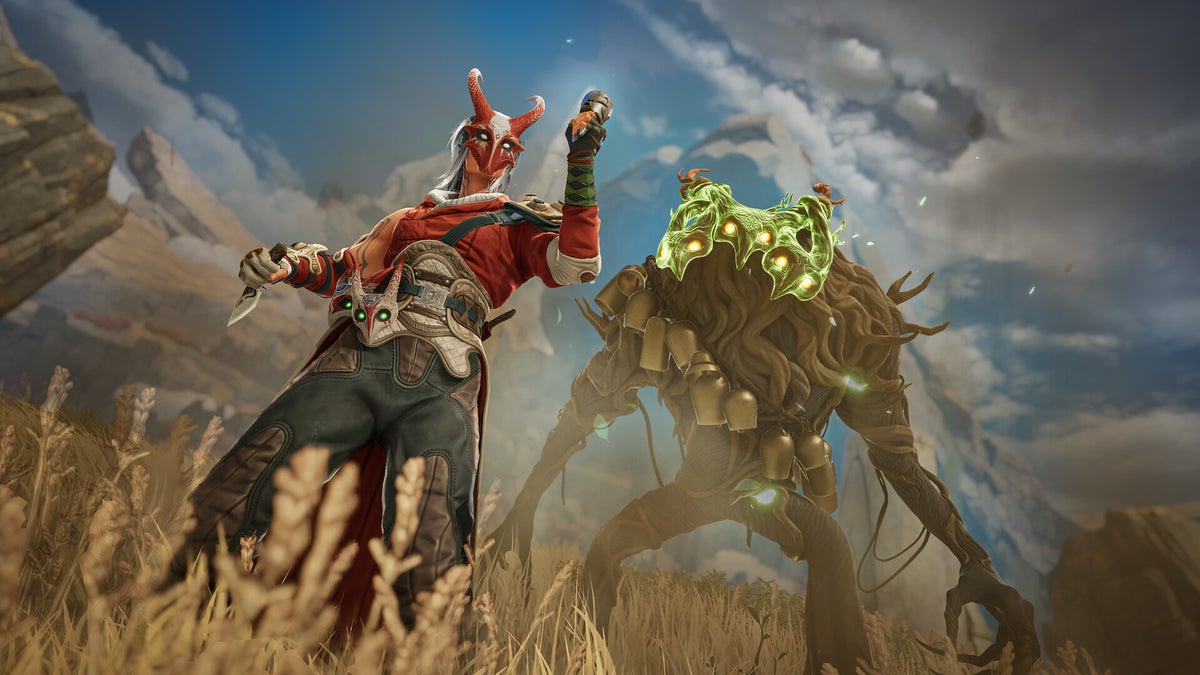
Several developers have come to the defence of Highguard, as its faces a continuous waves of negative criticism from masses of players and far-away spectators alike.
The game, which was much-anticipated following its end-of-show reveal at The Game Awards last year, spent a lengthy period of radio silence before ramping up the marketing last minute, resulting in a largely mysterious aura permeating around the game before it landed in player’s hands.
When it eventually did release, the game was met by a substantial initial playerbase eager to check it out, but also hampered by matchmaking issues. Over time, it fell to around a still respectable 10-20k concurrent player count, all the while many continued to criticise it.
“No game is perfect on day one (ours certainly wasn’t),” wrote 1047 Games on social media, the developer behind Splitgate: Arena Reloaded. “If you see potential, share feedback. It helps make the game better, and that’s something we should all be rooting for. There’s room for tons of great games. Wishing you success on Highguard, @WildlightEnt.”
Splitgate: Arena Reloaded is no stranger to harsh criticism themselves, after taking the leap from a niche but beloved Splitgate to a more controversial sequel. However, the team at 1047 Games is continuing to improve and add more experiences to the game, perhaps showing a similar path Highguard may take.
Thomas Puha, communications director at Remedy, also weighed in to provide some support. Puhu wrote: “Tired of seeing headlines of how many players Highguard has lost. Like, sure, you can argue that’s putting facts out there, but I cant escape the feeling there’s just this “celebration” of a game doing badly and just putting out negative headlines for the sake of it. Shouldn’t us game devs even try?”
Then comes Michael Douse, director of publishing at Larian, who followed on from Puhu’s statement with their own thoughts. “I remember standing on stage at DICE *trying* to see eye to eye with an executive audience who didn’t – couldn’t – figure out what they should be making, or even trying. It is funny in a way that the closer we all got to the audience, the further the industry got from understanding what it should be making. Caught in the crossfire of uncertainty are mistakes & the faces behind them.
“But while they aren’t the cause of the mistakes, they are in fact the reason for any successes. It is easy to celebrate failure because there’s security in feeling right, but I hope everyone finds enough to cling onto to the break that cycle of cynicism. Game development runs on optimism in contrast with economics. If the optimism & enthusiasm disappears at the same rate as the economics shrink, it’s gonna get messy.
“Thankfully there are hyper engaged audiences and low-cost opportunities all over the place. It’s just getting much harder to cut through the noise.”
Where the line between fair criticism and dog-pilling lies is at the core of this ongoing debate surrounding Highguard, as well as a perceived culture of negativity surrounding the games industry. Do these developers have a point? Let us know what you think.